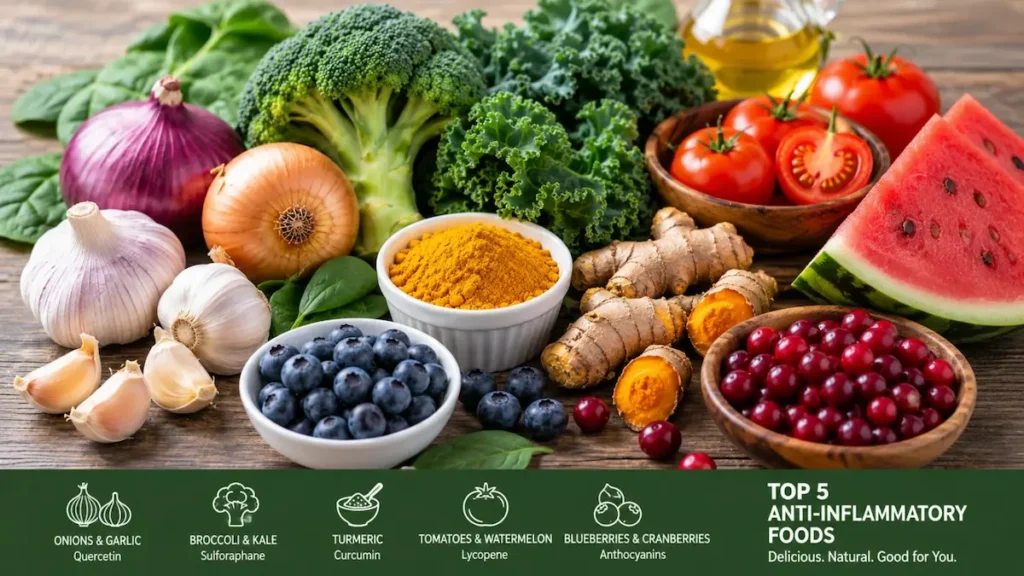
5Foods That Naturally Help Fight Inflammation
You’ve probably heard the word inflammation a lot lately. While short-term inflammation is your body’s natural way of fighting infections and healing injuries, chronic inflammation is a different story. Over time, it has been linked to conditions like heart disease, diabetes, arthritis, Alzheimer’s disease, and even certain cancers.
The good news? You don’t need a complicated diet to support your health. Simply adding more anti-inflammatory foods to your meals can make a real difference over time.
Here are five foods that nutrition experts and researchers consistently recommend.
1. Onions and Garlic
Onions and garlic do much more than add flavor to your meals.
They’re packed with quercetin, a natural antioxidant that helps protect your cells from oxidative stress. Studies suggest quercetin may help reduce inflammation by lowering harmful free radicals and calming inflammatory pathways in the body.
Garlic also contains allicin, a sulfur compound that’s released when garlic is chopped or crushed. Allicin has been widely studied for its antibacterial, antioxidant, and anti-inflammatory properties.
Easy tip: Chop fresh garlic and let it sit for about 10 minutes before cooking. This allows more allicin to form.
2. Broccoli and Kale
If you’re trying to eat healthier, broccoli and kale deserve a regular place on your plate.
These vegetables are rich in sulforaphane, a plant compound that helps activate your body’s own antioxidant defense system. Instead of acting as an antioxidant itself, sulforaphane encourages your body to produce protective enzymes that help fight oxidative stress.
Some research also suggests it may support healthy aging and protect cells from everyday damage.
Best way to eat them: Lightly steam broccoli instead of boiling it for a long time. Broccoli sprouts are another excellent source of sulforaphane.
3. Turmeric
Turmeric has been used in traditional medicine for centuries, and modern research continues to explore its health benefits.
Its active ingredient, curcumin, is one of the best-known natural compounds for supporting a healthy inflammatory response.
Curcumin may help reduce inflammatory markers while also acting as a powerful antioxidant.
One thing to remember is that curcumin isn’t absorbed very well on its own. Pairing turmeric with black pepper and a healthy fat like olive oil can significantly improve absorption.
4. Tomatoes and Watermelon
Tomatoes and watermelon are rich in lycopene, the antioxidant responsible for their bright red color.
Lycopene has been linked to better heart health and may help reduce oxidative damage caused by free radicals. Some studies even suggest it can help protect your skin from sun-related damage.
Interestingly, your body absorbs lycopene more easily from cooked tomatoes than from raw ones. Tomato sauce, soup, and paste are all great choices.
5. Blueberries and Cranberries
Few fruits are as nutrient-dense as berries.
Blueberries and cranberries contain high levels of anthocyanins, the natural pigments that give them their vibrant colors.
These compounds may help support healthy blood vessels, protect the brain as we age, and reduce inflammation throughout the body.
Whether they’re fresh or frozen, berries make an easy addition to oatmeal, yogurt, smoothies, or simply as a healthy snack.
Small Daily Habits Matter
No single food can magically eliminate inflammation. The biggest benefits come from your overall lifestyle.
Try to:
- Eat more fruits and vegetables.
- Stay physically active.
- Get enough quality sleep.
- Cut back on sugary drinks and highly processed foods.
- Manage stress in healthy ways.
Small changes, repeated every day, often lead to the biggest improvements over time.
Final Thoughts
There’s no such thing as a miracle food, but choosing more anti-inflammatory foods is one of the simplest ways to support your long-term health.
Adding onions, garlic, broccoli, kale, turmeric, tomatoes, watermelon, blueberries, and cranberries to your regular meals gives your body a variety of nutrients and antioxidants that work together to keep you healthy.
Healthy eating doesn’t have to be perfect. It just has to be consistent.